
An ensemble scene maker for three-person drama
Put two or three characters in the same room and let their sheets argue. The composer takes a location, a cast of up to three, and a few lines of action, then renders a vertical scene with spoken dialogue.
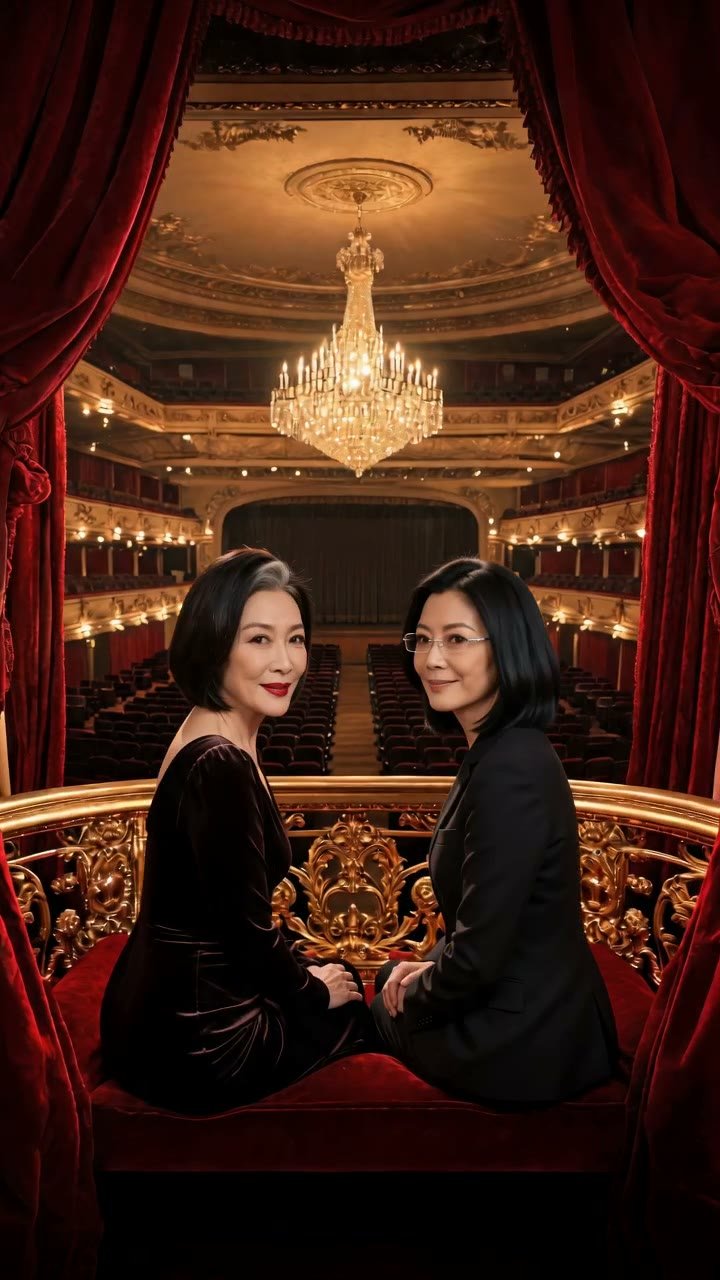


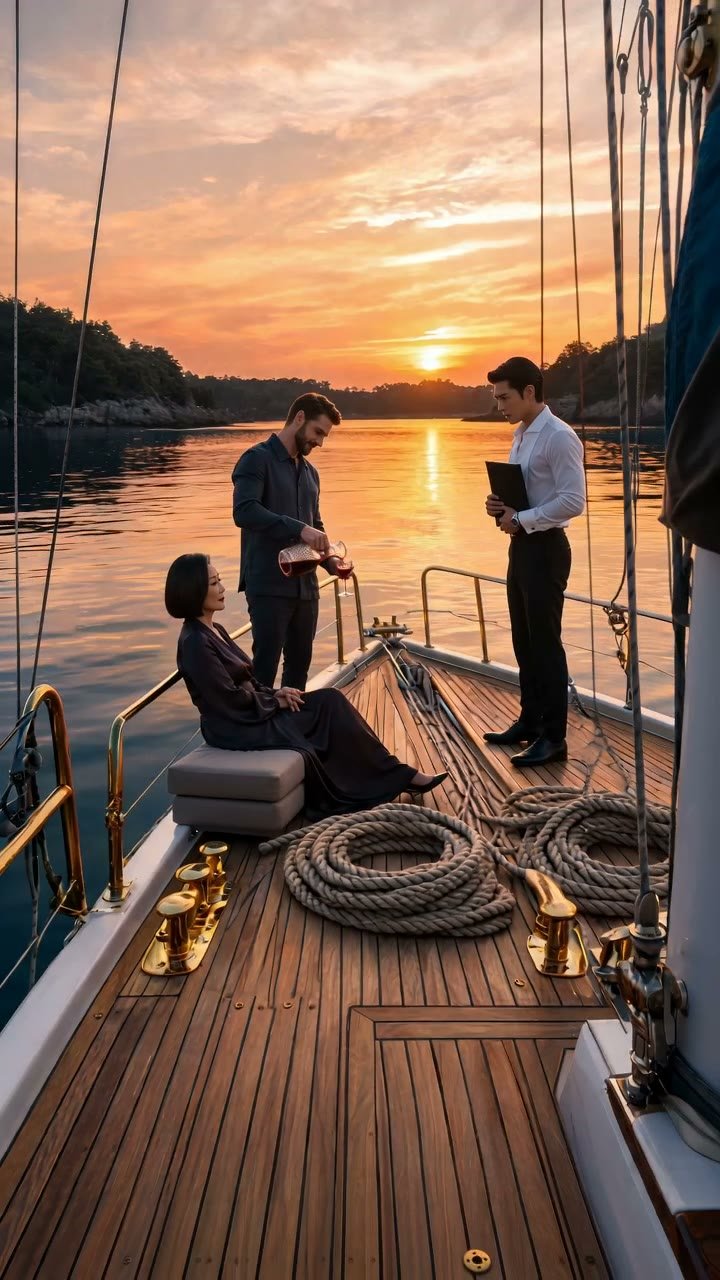
Choose the room first
Pick a location so the blocking has furniture and exits to work with. The opera box and the night-train sleeper force closeness; the rooftop pool allows distance.
Add up to three cast members
Select characters whose sheets reference each other. Set outfit, prop and voice style for each, keeping the reference count at 9 or fewer.
Write the action and the turn
Two to five lines: who is where, what is said or wanted, and the moment the scene tips. Leave phrasing to the sheets.
Render in standard, keep in cinematic
Test at 6 credits per second, adjust the sheets if a relationship did not land, then re-render the final at 1080p.
Why the cap is three
A 9:16 frame is tall and narrow. Three people fill it; four crowd it and the faces shrink to where consistency starts to suffer. Three is also the natural shape of most dramatic scenes: two people who disagree and one who tips the balance. The composer enforces the limit so you design within it from the start.
Each of the three can carry an outfit, a prop and a voice style. With the location that is up to ten references, so the 9-image cap usually means one character goes without a prop. The composer shows the count as you build.
Relationship notes fire in company
Every character sheet includes relationship lines naming other cast members. When both named characters are on the call sheet, both notes are in the prompt and the scene writer uses them. Put Tobias and Ottilie together and the model knows one is a junior barrister who once argued badly in front of the other; put Tobias with Lucan instead and a different note takes over.
This is the mechanism that makes ensemble scenes feel like they have history. You do not write "Tobias is nervous because Ottilie once humiliated him" in the scene prompt. You wrote it once on his sheet, and it surfaces whenever they share a frame.
Write notes from both sides. Ottilie's view of Tobias is probably that he is promising and over-eager. When both notes are present the exchange has texture that a single note cannot give.
Blocking in a few lines
A scene prompt is short on purpose: two to five lines of what happens. Blocking is part of that. "Idris is already seated. Keiko enters, does not sit. Rafael watches from the doorway and speaks last" is enough. The model stages it, and the sheets supply how each person sits, stands and interrupts.
Describe positions relative to each other and to the location rather than in camera terms. "Across the table", "by the window", "half out the door" land better than lens or shot-size language in a vertical frame.
Give the scene a turn. The best three-person prompts contain a moment where the balance shifts: a confession, a refusal, a question nobody wants answered. Without a turn, the model produces conversation; with one, it produces drama.
Dialogue without a script
You can write exact lines if you want them, and the model will deliver them. Most people write intent instead: "Noor asks about the missing invoice; Caspian deflects twice, then admits he moved it". The speaking-style notes decide the phrasing, which is why they are worth polishing.
Each character's voice style is chosen in the composer when you add them. Keep it the same across scenes so an audience recognises who is speaking even before the face is on screen.
Costs and tiers for ensemble work
Scenes are priced per second by tier. Standard 720p is 6 credits per second, so a 5-second three-hander is 30 credits. Cinematic 1080p is 30 credits per second and worth reserving for the scenes that carry the most weight. Cast size does not change the price; only duration and tier do.
A sensible rhythm is to block and test in standard, then re-render the keeper in cinematic. The Troupe plan at $29 a month with 1000 credits suits a series shooting several ensemble scenes a week; the Ensemble plan at $9 with 250 credits covers a lighter schedule.
Questions people ask
Can I put more than three characters in a scene?+
No. The composer caps a scene at three cast members so faces stay large enough in a vertical frame for the references to hold.
Do I need to write the dialogue line by line?+
Only if you want specific wording. Describing what each character wants and how the exchange turns is usually enough; speaking-style notes handle the phrasing.
What makes relationship notes activate?+
Both characters named in a note must be in the scene. Then each sheet's note about the other is in the prompt and the model plays the relationship.
Who holds the rights to an ensemble scene I render?+
Does a three-person scene cost more than a solo one?+
No. Price depends on duration and tier only. A 5-second standard scene is 30 credits whether one or three characters are in it.
Can characters in a scene have different voice styles?+
Yes. Voice style is set per character when you add them, and the styles are descriptors rather than recordings, so you can contrast a measured voice with a quick one.
Stage a three-hander
Pick a location, add two or three cast members with history, and write the moment where it turns.
Open the cast studio