
A drama world builder that follows every scene
The world bible is a single document per account: title, premise, setting, era, tone and rules. Whatever you write there is appended to each scene prompt, so the series keeps its shape without you restating it.
Fill the six fields
In the studio, write the title, premise, setting, era, tone and rules. Keep the whole thing under about two hundred words.
Generate locations in period
With the bible saved, create one or two signature sets. Era and setting are already in the prompt, so they arrive matching.
Write a scene without restating the world
Compose a short scene describing only what happens. Confirm the render reflects the era and tone you wrote.
Revise the bible as the story moves
After major turns, update setting or rules so later episodes inherit the change instead of drifting back.
What goes in the bible
Six fields. The title names the series. The premise is two or three sentences on what the story is about and what is at stake. Setting fixes the place; era fixes the time. Tone tells the scene writer how to pitch the dialogue, from brittle comedy to slow-burn melodrama. Rules are the constraints: no one mentions the fire, every episode ends on a question, nobody uses first names.
Write it before the first scene if you can. A bible that exists only in your head leaks out in prompt after prompt, and each leak is slightly different. A bible written down is the same every time it is read, which is the point.
Length is modest by design. The bible is appended to every render, so a bloated one crowds out the scene itself. A tight hundred and fifty words does more than a sprawling thousand.
How the bible rides into each render
When you compose a scene, the prompt the model receives is your scene text plus the sheets of everyone present plus the world bible. You never see the stitching; you just write "Noor confronts Caspian about the invoice" and the model already knows the series is set in a port city in 1986, that the tone is dry, and that nobody says what they mean on the first try.
Because the bible is appended rather than merged, you can override it in a given scene. If the rule is that episodes end on a question and this one needs to end on a door closing, say so in the scene prompt and the specific instruction wins.
Era and setting shape everything visible
Era does quiet work on wardrobe, props and locations. A bible set in the 1950s nudges generated outfits toward the right silhouettes and tells the scene model to leave modern objects out of frame. Setting does the same for architecture and weather. Generate your locations after the bible is written and they will arrive already in period.
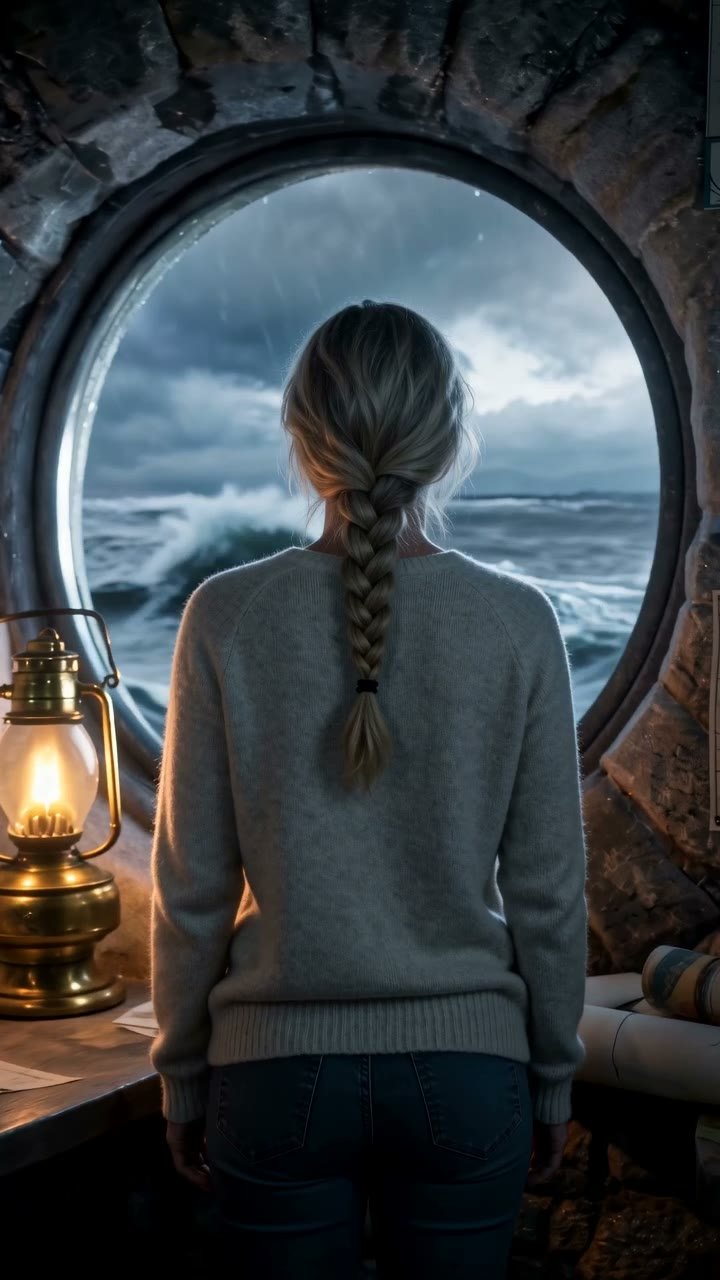
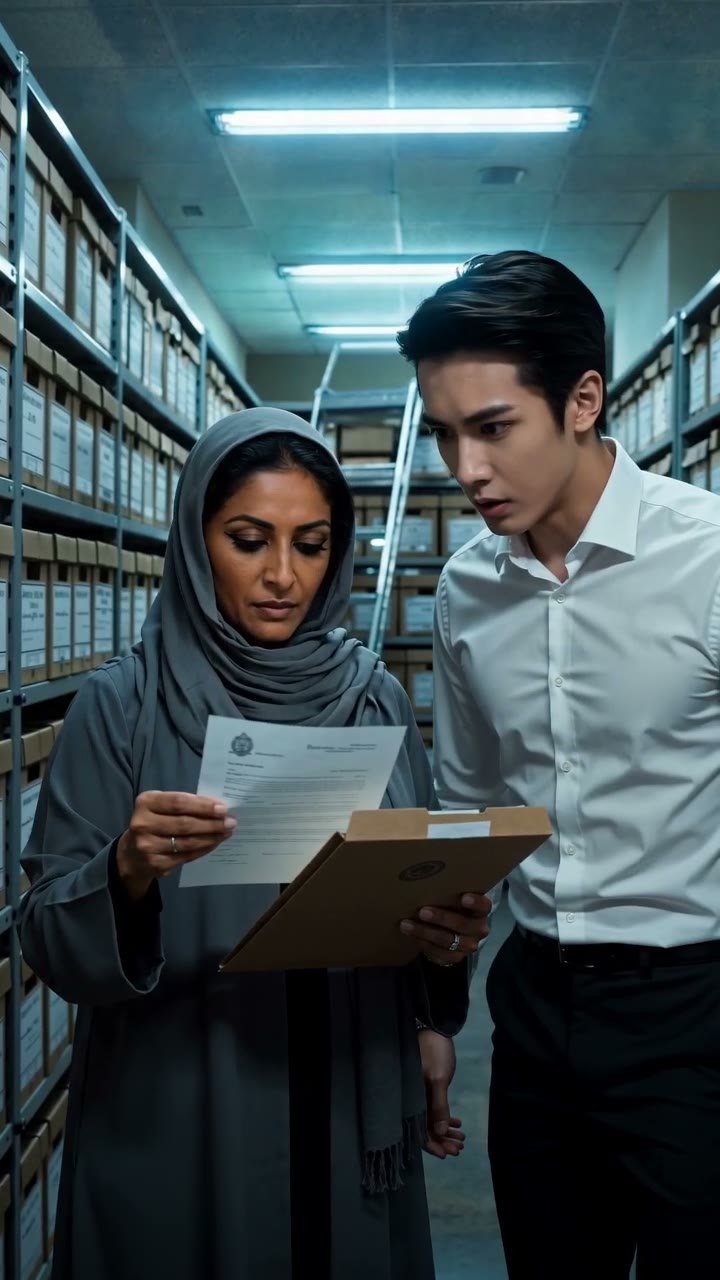
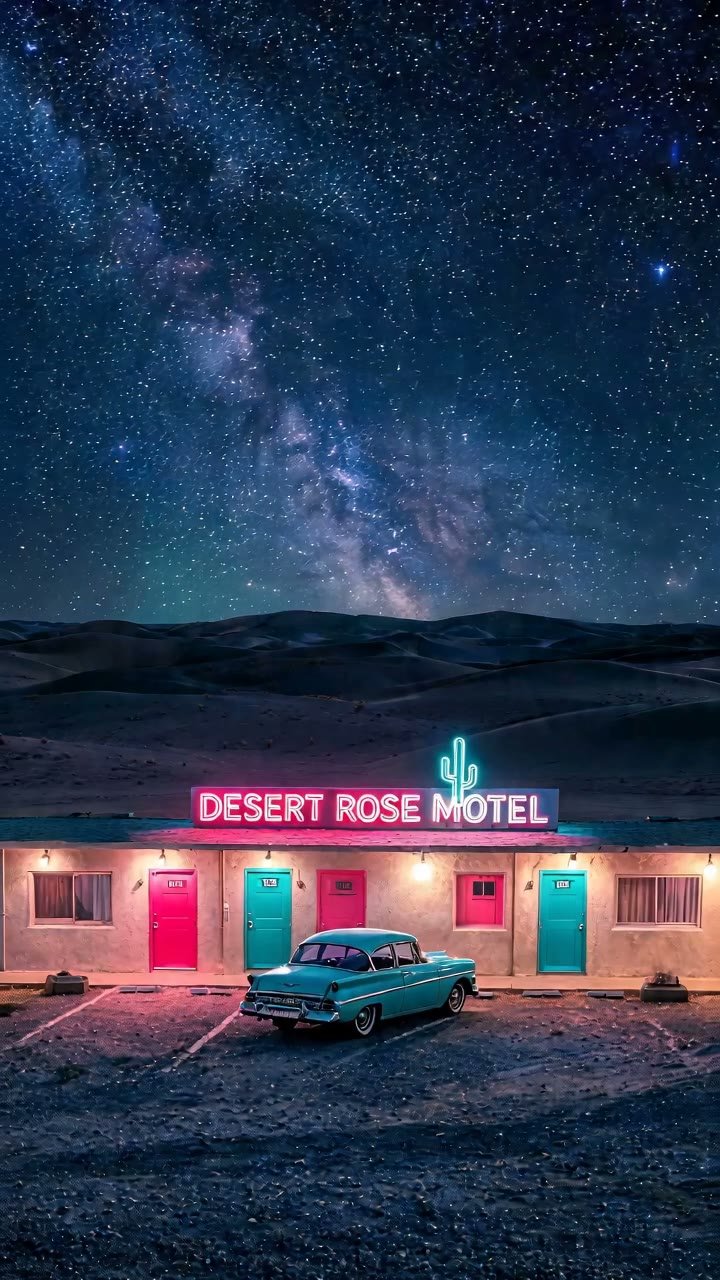
The preset locations are era-flexible on purpose: a lighthouse keeper's room, an archive, a desert motel. They read correctly in most decades. If your era is specific, generate one or two signature locations of your own to anchor it.
Setting can be fictional. A coastal town that does not exist is fine; describe its weather, its industry and what people there are proud of, and the model treats it as real.
Tone and rules keep the writing in character
Tone is the field most people underwrite. "Dramatic" says nothing. "Everyone is polite until they are not, and the turn happens mid-sentence" is a tone the scene writer can perform. Name a texture, a pace and an attitude toward feelings.
Rules are where a series gets its signature. They can be structural (each scene is a single conversation), stylistic (nobody raises their voice), or narrative (the lighthouse is never shown from outside). Three to five rules is plenty. The model honours them consistently because they are present in every prompt.
Continuity across a series
A short drama told in episodes lives or dies on continuity, and the bible is where series-level continuity is stored. Character sheets hold who people are; the bible holds where and when and in what register. Update it as the story moves: if episode four relocates everyone to the desert motel, change the setting field so episode five inherits the move.
Combined with portraits as reference images, the bible lets you shoot scenes out of order and in different sessions without the series fraying. Shoot the ending first if you know it. The world will be the same when you go back for the middle.
Questions people ask
Is there one world bible or one per series?+
One per account. If you run more than one series, keep the previous bible text somewhere safe and swap it in when you return to that story.
Can a scene contradict the bible?+
Yes, deliberately. Instructions in the scene prompt take precedence for that render, so you can break a rule once without editing the bible.
Does the bible cost credits?+
No. Writing and editing the world bible is free. Credits are spent only on generating characters, wardrobe, locations, props and rendering scenes.
Do I own the world I build here?+
How long should the premise be?+
Two to four sentences. Say who the story follows, what they want, and what stands in the way. Leave episode-level detail to the scenes.
Does the bible affect voice styles?+
Indirectly. Tone influences the words characters say, and voice styles are chosen per character in the composer. Both work together but are set separately.
Write the world once
Open the world bible, set the premise and era, and let every scene after that inherit it.
Open the cast studio